Septic Maintenance Contracts in Bryan, TX
An aerobic system has moving parts and a disinfection stage, and it does its best work when someone checks on it regularly. A maintenance contract is how that happens.
What a maintenance contract is
A maintenance contract is an agreement with a septic service to inspect and look after your aerobic system on a regular schedule, so the aerator, control panel, alarm and disinfection get checked without you having to remember.
With a maintenance contract, your aerobic system gets inspected on a regular schedule, usually every four months, depending on your county and on whether the system serves a single-family home or a commercial property. After each visit, the report goes to you and to your county.
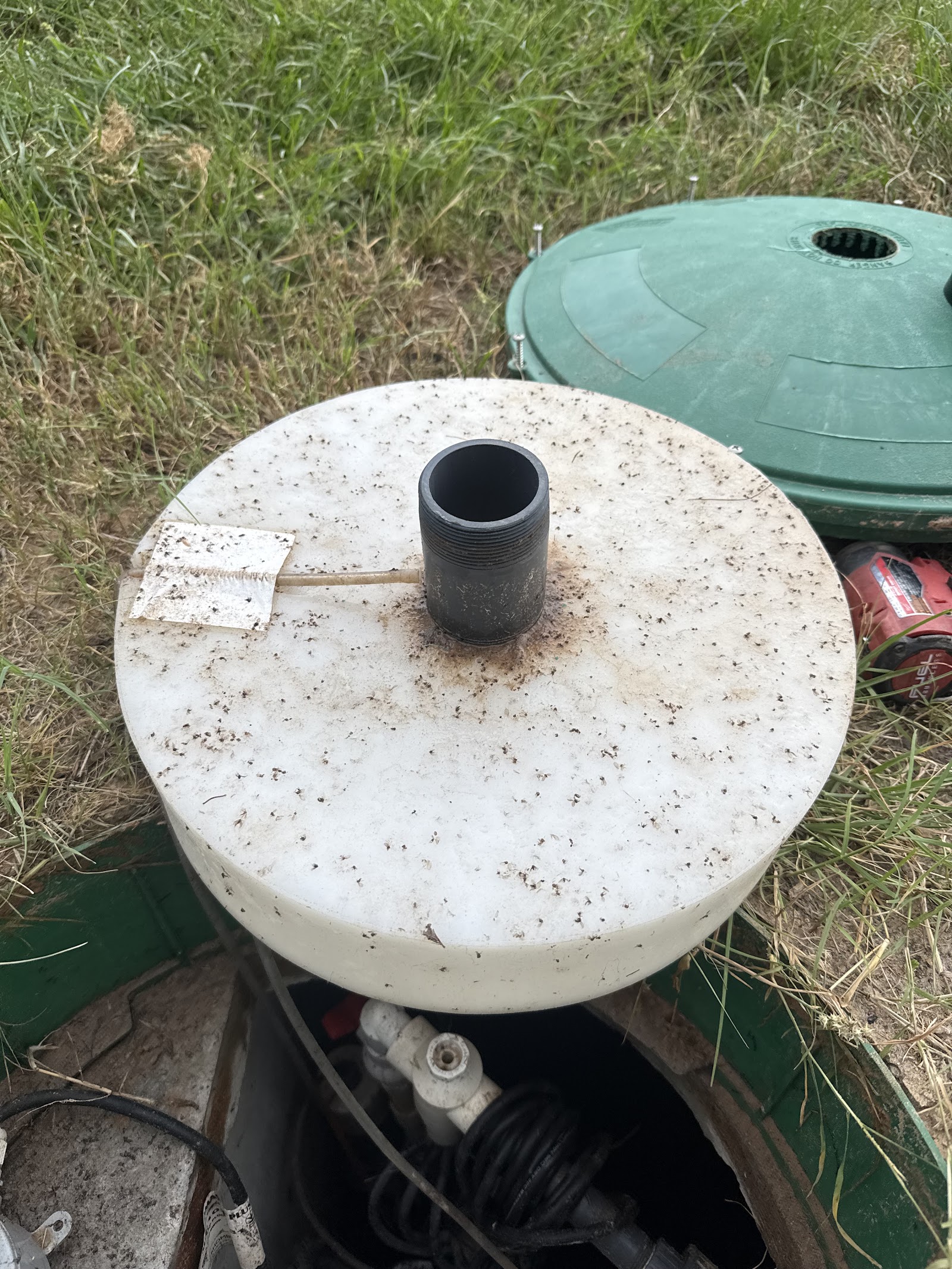
What a maintenance visit covers
Every aerobic unit is laid out a little differently, but a typical visit works through the same parts of the system.
-
Aerator or compressor
Whether it's running and air is actually reaching the treatment tank.
-
Pump and control panel
Whether the pump comes on when it should, and the panel's breakers, timer and switches are doing their jobs.
-
Alarms
Whether the audible and visual alarm still work, so you'll know when something goes wrong between visits.
-
Effluent quality
How the treated water looks and smells. On spray systems under a Texas maintenance contract, the chlorine residual or fecal coliform test.
-
Spray heads or drip lines
Spray heads that pop up, turn and stay inside their area. Drip lines without leaks or soggy patches.
-
Disinfection
The chlorinator or other disinfection unit, and whether it has the right supply in it.
When a tank does need pumping, Texas requires that it be done by a TCEQ-registered septage transporter.
Signs your system is overdue for service
Aerobic systems usually tell you when they need attention. Don't wait on any of these.
The alarm is going off
A buzzer or a lit alarm light on the control panel means something in the system isn't right. Silencing it doesn't fix the cause. Call the service company.
You smell sewage outside
A working aerobic unit shouldn't stink. Odor around the tanks or the spray area often means the aerator has stopped or treatment has slipped.
The dispersal area looks wrong
Soggy ground, standing water, a discolored patch or grass that's suddenly much greener than the rest of the yard.
Nobody remembers the last visit
An empty chlorinator, spray heads that never seem to pop up, or a two-year service policy that ran out a while ago.
What to expect from a service visit
There's not much for you to do. A little prep makes it go quicker.
-
01
You call and set a time
Call (979) 213-3460, Monday to Friday between 7 a.m. and 6 p.m.
-
02
Clear the way
Make sure the tank lids, control panel and spray area can be reached. Dogs inside or penned helps a lot.
-
03
The system gets checked
The parts listed above get looked at, and anything that's off gets noted.
-
04
You hear what was found
What's working and what needs attention. Under a Texas maintenance contract, the report goes to you and the permitting authority within 14 days.
Common questions about aerobic maintenance
My aerobic system is new. Is maintenance included?
For a while. In Texas, a new aerobic system comes with an initial two-year service policy, starting when the system is first used (for a new home, the builder's sale date). After that, keep it on a maintenance contract so it stays inspected on schedule. Your county may require one.
How often does a maintenance company inspect an aerobic system?
Under a maintenance contract in Texas, at least once every four months, with a report to you and to the permitting authority within 14 days. Spray systems are also tested for chlorine residual or fecal coliform at each visit.
Never put pool chlorine tablets in an aerobic system
Tablet chlorinators need calcium hypochlorite tablets labeled for wastewater. TCEQ is blunt about it: "DO NOT use swimming pool chlorine tablets in your disinfection system." Use only the disinfectant your system is made for.
More answers, including permits, are on the FAQ page. A county's septic order can be stricter than the state rules, so confirm the specifics with your permitting authority.
Put your aerobic system on a schedule
Ask about a maintenance contract for your system. We're based in Bryan, TX.